Showing posts with label tony hawk. Show all posts

Monday, 13 June 2011

Authentic Simulation, or the Art of Couch Skating

As like many skaters, my interests reach further than simply the act of riding a skateboard. Some make art, some make music, some even ride motocross. I, myself, am a gamer.
Video game culture, and being a gamer, has a lot of parallels, I find, with skate culture. Both acts have been historically scoffed away as being child's play; something cast aside as soon as one gets a driver's license and a girlfriend. On that note, both have historically attracted the socially maladjusted: many a skater who went to high school in the 80s or early 90s will recount tales of how admitting you skated was a sure-fire way to detract attention from the opposite sex - a trait undoubtedly shared by the gamers of the same era. Both have an admittedly shameful history of male-dominated participation, bordering at times on misogyny.
Both have seen an increase in acceptance and casual participation in the last decade, and both have a collective of 'core curmudgeons who often rue that this is the case. So why am I talking about all of this? Well, because today I'm talking about what happens when these two things come together.

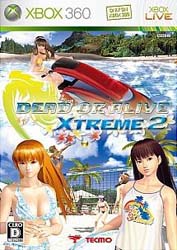
Maybe six months or so prior to starting Between Two Junkyards, I had mused about the idea of doing a video-review show all about skateboarding video games, of which there have been countless iterations, dating back as far as the 1986 classic 720 Degrees Arcade game, ported to the Atari 2600. While I could go on for months on end writing reviews of the rarely good, often bad, and occasionally ugly history of skateboarding video games, it ultimately boils down to the fact that, for the last quarter century, video game developers have been trying to emulate the act of skateboarding, without actually using a skateboard.
  
Yeah... This seems about right...
What really got my mind stirring on this topic was a recent binge I went on this weekend of video game webcomics. Due to my inherent need to be completely up-to-date on whatever webcomics I read, I came across this strip about Tony Hawk Ride. It brought up an interesting point: it a skateboarding game good because it's fun, or because it's realistic?

Well... kind of both.

In preparation for this blog, I talked to my girlfriend, who both skates and is an avid gamer, her thoughts on the matter:

"[Realism]...because [a more realistic game] helps you learn tricks: if it's easy and you can't fail what's the point? No video game should be like that. Where is the challenge?"

Now, I will defend the first handful of Tony Hawk games to the death - they were great games, and they did the best job possible at the time of capturing the act of skateboarding. Unfortunately, however, as the games progressed, they jumped the shark in an unforgivably huge way...
I heard Brian Herman just Franklin Grinded the Hollywood 16.
RIDE was meant, I suppose, to remedy this, as well as jump all over the Great Peripheral Bandwagon of the late 2000s. The aforementioned comic argued that the game was too real to be fun, though as a skater who actually tried it, it seemed more so that the game was simply trying too hard, and fell flat both in realism and fun. A valiant effort, Tony, but you and I both know that skateboarding is far more complex than the game's controls can account for.

Perhaps EA's Skate series is the closest modern technology has come to offering a fun, challenging, and accurate representation of skateboarding. I know I've spent countless hours playing the games, whose admittedly intuitive control scheme did offer me some assistance on my real-life fakie bigflips. Still, though, at the end of the day, no ammount of thumb-based training can compare to the feeling of actually getting out there and feeling the board under your feet.

Although it is a nice way to kill time on a rainy day.

Sunday, 22 May 2011

Super Bowl Party! Part IV: The Afterparty

Well, I hope everybody enjoyed their weekends; I'm happy to report that my good friend's annual "Pro-Tec Pool Party...Party" was, again, a success. Those of you who got a chance to watch the contest are fully aware that it was, indeed, a sight to behold. Those of you who were unable to watch, however, allow me to break down my personal highlights (and lowlights):

The Masters' Division:

The Masters', as always, was a treat to watch. It was really cool this year to see 75% of the original Bones Brigade vert stars (Tony Hawk, Steve Caballero, Lance Mountain) skating a contest together for the first time in a couple of decades. Tony, who I had assumed was going to be a shoo-in for first, wound up placing fourth behind Chris Miller, Cab, and Lance respectively. In hindsight, this isn't entirely surprising, given Tony was a last-minute entrant. Granted, Tony had his 540s on lock the entire night (as did both Tony Mag and Sluggo, neither of whom made the finals), but his technical use of the bowl was simply not on par with the three guys who bested him. Regardless, Tony seemed to have had a good time, and his runs were entirely entertaining to watch, namely his circa 1985 Rage at the Badlands 360 slide and roll through the square corner. It's genuinely difficult to pinpoint a favourite part of the Masters' contest, though Chris Miller's zero-gravity high speed frontside air transfer into the round bowl will forever be tattooed into my psyche. Notable disappointments include a lack of Hosoi for Tony's big return to the combi, and a distinct lack of Jeff Grosso....


Well, except for this commercial, which incited a good laugh every time it aired between heats.

 The Pro Division:

I genuinely feel for the judges on this one. Even in spite of Bucky not being present to throw nollie flip madonnas alongside mceggs and flying vs, the pros put on a show that had everybody out of their seats and up on their feet (author excluded, broken ankle and whatnot). As expected, Pedro Barros mimicked the recent shuttle launch with his straight airs, and tossed more 540 variations than most of the other pros combined. Andy MacDonald, who deserves way more recognition than he has ever received as a professional, mixed in the new and the old, added a heaping helping of consistency, and managed third place behind Pedro and Rune Glifberg respectively, with a particular standout being his repeated attempts at a FREAKING BACKFLIP BACKSIDE BONELESS TRANSFER ACROSS THE PENINSULA!!! God, I wish he'd made that one....
Ben Raybourne was a noticeable absence from this year, though it seemed that Tony Trujillo was put in place last minute to fill that "padless and unplanned" niche, though to be honest, I think Raybourne would have skated a bit better (no offense, Tony).

End of the day, I cannot say enough good things about the Party this year, but you really need to see it for yourself....

For a full archive of the entire 2011 Pro-Tec Pool Party, head to Vans' official site.

For a more abridged summation, check out the edits over at the Thrasher site.

Thursday, 19 May 2011

Super Bowl Party! Part III

Okay, so first off, two-time Pool Party champ Bucky Lasek is out of the contest on account of a broken ankle, and TONY HAWK IS IN! so that happened.

Have your heads finished exploding?

Awesome.

On to business.

So, aside from the obvious Tony Hawk is finally skating a proper contest again, why does skateboarding need the Pool Party? What makes it different from the throng of contests put on every year?

Sorry, Tony, awesome as the All 80s contests are, they're pretty much a costume party...

1) The Pool Party is one of the only exclusively vertical contests left. The only other one I can think of is the Rumble in Ramona, and let's face it, that's more of a weekend-long ramp party. When you consider all the major contests right now, there are really two kinds: those with both street and vert, with the vert contest playing second fiddle (re: Maloof, Tampa, X-Games...... pretty much all of them), and contests that are only street contests (re: Street League, Manny Mania, Thrasher's occasional "let's throw a carcass-toss for cash at a famous street spot"). Accentuated by the fact that the pool party is held in a multi-faceted bowl, the contest not only helps legitimize vert riding itself, but also helps break the stereotype that a vert contest is relegated to sixteen tricks done back and forth on a basic vert ramp.
There's a reason the old Gameboy Colour port of THPS didn't do well...

2) The Pool Party has an inherent lack of (non-skateboarding-centric) corporate sponsorship. Let's be honest, all three or four of you reading this blog, along with myself, skate. That being said, we all know that skaters are weary of big corporate America getting its chocolate chequebooks into our peanut-butter professional endorsement. (Apparently when the owners of an NBA team want to throw money at us, that's okay, but I'll save that for another time). Skaters have learned time and again that if we want something done right, we need to do it ourselves. It's the reason why the Gravity Games failed, and the X-Games are on the way.
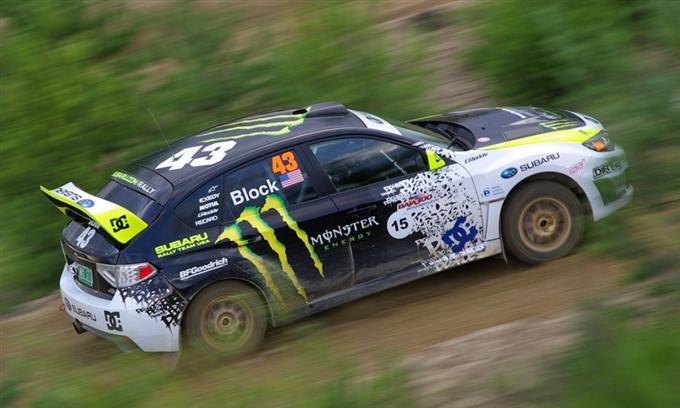
Well, not to mention lumping skateboarding in with Rally Racing.... nice, ESPN....

It's the reason why Tampa Pro is considered the most legitimate pro street (and vert) contest in North America. The Pool Party is run by Vans, Pro-Tec, and Rockstar (Okay, I know, an energy drink sponsor, but skaters drink 'em, and your new Almost deck was manufactured using money taken from collar-popping jocks who bought Globe flip-flops, so don't get me started). The lack of corporate sponsors at the Pool Party makes it feel like it's of skaters and for skaters, and for a discipline where the pros are maligned on message boards throughout the interwebs for everything from padding up to being sponsored by beef jerky, something that adds a plash of hardcore back into the fray can't hurt. Vertical riding is awesome, and this contest affords people the opportunity to watch a well-run, organized vertical contest that isn't bogged down with Taco Bell and Verizon Wireless banners, making the whole thing seem like a corporate publicity stunt. The Pool Party is about skateboarding, the way it should be.

Stay tuned for Monday, when I'll wrap up the winners, losers, makes, slams, and Jeff Grosso's epic pool gut.
And hopefully equally epic andrechts.

Sunday, 15 May 2011

Super Bowl Party! Part II

Welcome back to part 2 of my 4 part mini-series on this year's Pro-Tec Pool Party. Last post I rambled on about the importance of the Masters' contest, and why it made the Pool Party worth watching, so this post I'm talking about the Pro division.

There's a lot about the riders that make up the pro division of the Pool Party that I think is worth talking a little bit about. It all really starts when you look at the age range of the guys skating the pro division:

Bucky Lasek: 38
Rune Glifberg: 36
Omar Hassan: 38
Pedro Barros: 16
Bob Burnquist: 34
Alex Perelson: 20
Josh Borden: 20
Lincoln Ueda: 37 (as of last Tuesday, Happy Belated!)
Benji Galloway: 33
Nolan Munroe: 18
Ben Raybourn: 18
Zach Miller "Lite": 21
Bruno Passos: 35
Michael Brookman: 18
Sky Siljeg: 16
Bennett Harada: 32
Matt Boyster: 21
Andy MacDonald: 37
Anthony Furlong: 32
Joshua Rodriguez: 20

Now, for me, I can't help but notice the staggering eleven-year jump in ages from the oldest of the young guys (Miller and Boyster) to the youngest of the old guys (Furlong and Harada). While I am perfectly aware of the fact that this gap is indicative of vert skating's so-called "Dead Years", it is genuinely interesting to have watched, in the last few years or so, this sudden surge of young, fresh-faced vert riders burst into the ranks of professional competition; ranks that, since about the mid-nineties, had remained largely unchanged. Speaking as someone who started skateboarding during the utmost height of street skating's popularity, I went through the whole of the 2000s seeing, on the street side of things, a handful of new guys popping up every year or so, and maybe a handful retiring their pro models, or at the very least just kind of fading away from mainstream coverage. There seemed to kind of be this natural flow in mainstream street coverage, as opposed to the kind of generational dynasties that existed through the 70s and 80s, these groups of pros that kind of cornered the market, the mags, and the competition standings for maybe five years or so until the next dynasty cropped up.
The thing is, vertical skating is not easy to delve into wholeheartedly. You can maybe chalk this up to accessibility and intimidation. For one thing, proper vertical ramps and bowls have been, for the last couple of decades, notoriously hard to come by; a trend that has only recently started to change. Second, for anyone who has never skated vert before, it is really, really difficult. Learning even a basic trick can be the equivalent of trying to learn a basic street trick down a set of eight stairs before even trying it on flat ground. There is no middle ground with vert, which is why it isn't surprising that there is a seeming decade full of stories of Tom Grom who, when given the option of 1) missioning at least two hours to the nearest vert ramp to spend a month learning how to do airs, or 2) waxing the curb out front of the local 7-11, the choice was a no-brainer.

I think it was the Slurpees the really tipped the scale, here.


However, then came the 2000s, replete with the X-Games, Tony Hawk's Pro Skater franchise, and the North American Daycare Skatepark boom.


Now, not only were kids being marketed vert and street skating on a more equal footing than ever since around 1992 or so, but with an increased frequency of high-quality daycares skateparks being built, many of these kids had much greater access to a forum in which they could be dropped off for the day while dad works and mom shops practice whatever discipline of skateboarding they so desired.
Now, shake well, fast forward five to ten years, and you have this aforementioned sudden explosion of vertical talent; kids who probably got into skateboarding because of the THPS games, and now find themselves hurling 540s alongside many of the guys they probably spent countless ours skating as in front of their TVs. With many of the older guys of the batch pushing up near the qualifying age for the Masters' division, there's really only a scant few years in which we can really observe this phenomenon of two generations of professional skaters in the process of passing the torch from the old guard to the young blood, and there's something really special about that.
And on a related note, I can't wait to see what happens in 2013 when Bucky and Omar start competing in the Masters' contest - Lance's going to have to relearn his 540s...

Stay tuned for part 3 on Friday, when I'll talk about why skateboarding needs the Pro-Tec Pool Party.